PARIS
DECEMBER 11, 2025 – JANUARY 24, 2026
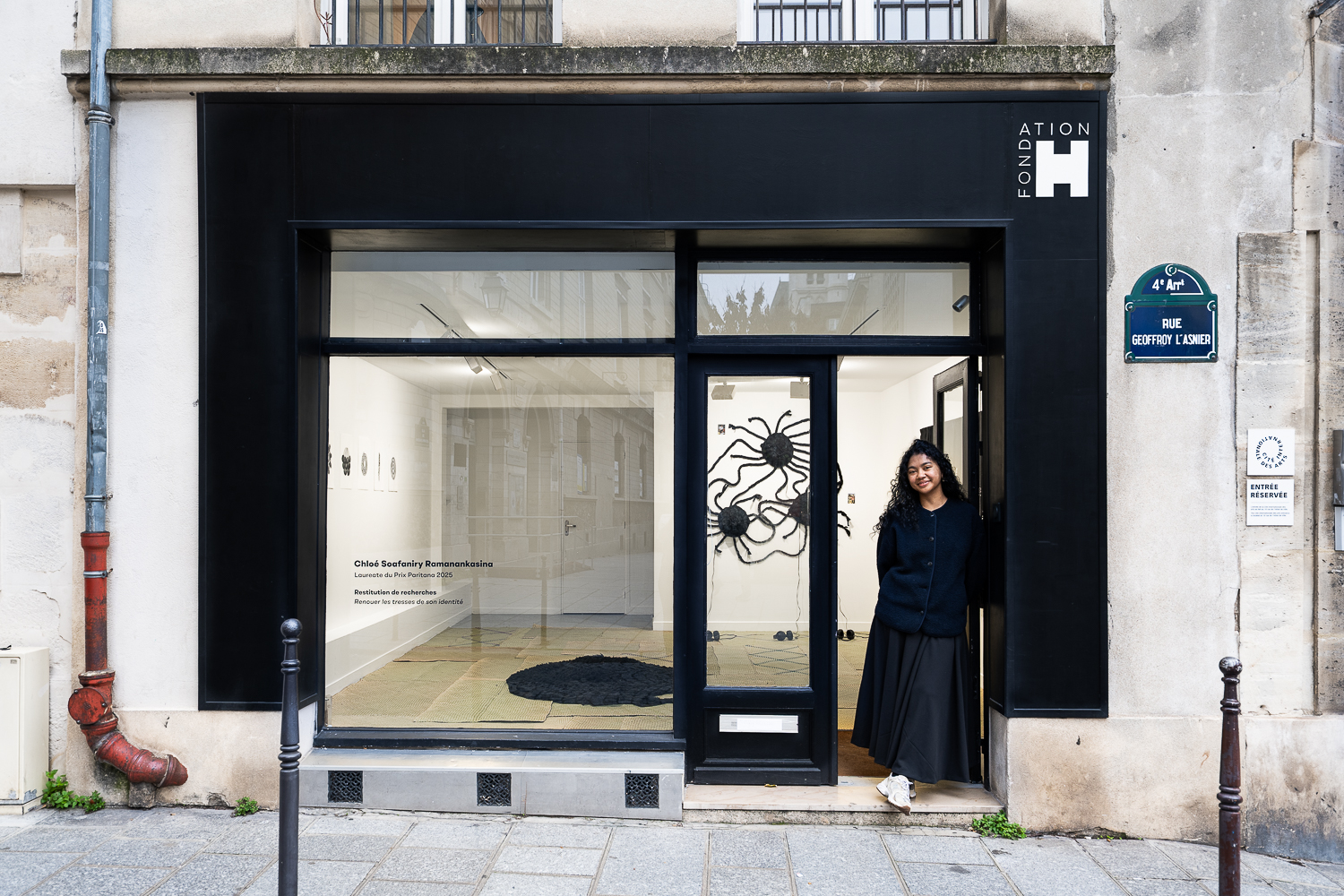
Fondation H, in partnership with the Cité internationale des arts de Paris, is delighted to welcome Chloé Soafaniry Ramanankasina, winner of Prix Paritana 2025, for a three-month residency from October 5, to December 22, 2025, to develop her project Renouer les tresses de son identité [Reweaving the braids of one’s identity], presented in the Parisian space of Fondation H from 11 December 2025 to 24 January 2026
During her residency, Chloé Soafaniry Ramanankasina focuses on the practice of braiding, particularly within the Malagasy context, exploring its role in cultural transmission and the construction of identity. Renouer les tresses de son identité [Reweaving the braids of one’s identity] questions both cultural heritage and our personal relationship to it. The project’s title suggests a process of reconciliation and reconnection with a history that may at times be fragmented.
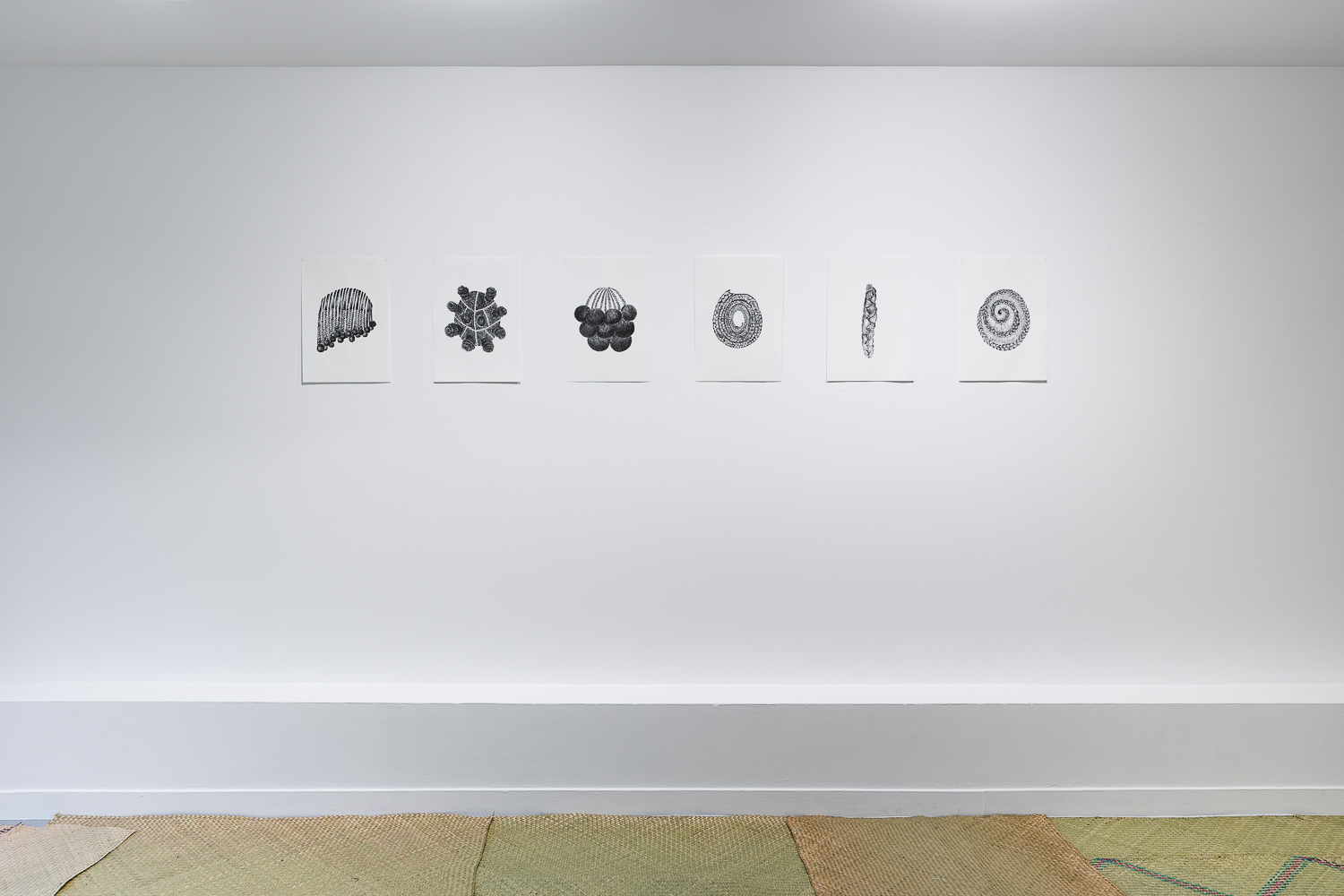
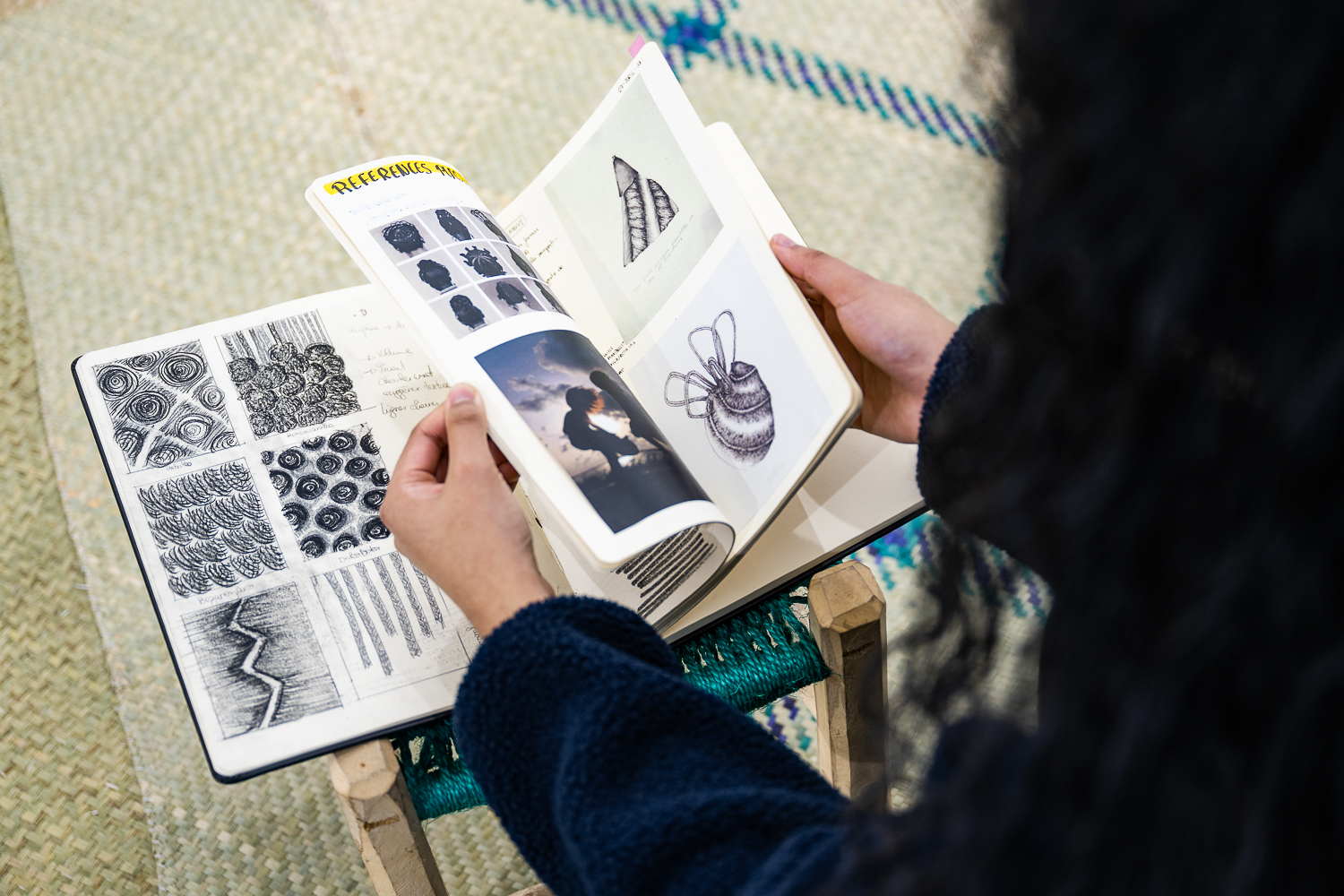
In many cultures, the act of braiding hair — one’s own or that of others — is a social ritual that binds generations together. The moment of braiding creates a space for exchange, where people converse, learn and pass on stories and skills, while the very form of the braid is often deeply codified within specific cultural traditions. This project proposes to explore these dimensions through three installations — Hériter, Transmettre et Imaginer [To Inherit, To Transmit and To Imagine] — offering a shared introspective experience. Combining drawing, photography and artificial intelligence to envision new hairstyles, Chloé Soafaniry Ramanankasina seeks to push beyond the limits of reality and propose new visual forms around hairdressing.
BIOGRAPHY OF CHLOÉ SOAFANIRY RAMANANKASINA
Born in 2000 in Tamatave, Chloé Soafaniry Ramanankasina lives and works in Lyon, France. After completing highschool, she moved to France to study design and is currently pursuing a Master’s degree in Prospective Design at Université des Mines and Université de Saint-Étienne. She is the initiator of two community projects for people of African descent — Palabres and KBR — both conceived as creative spaces of expression. She took part in Transmission(s), a group exhibition on the theme Design & Cultural Identities at Tati Barbès, Paris, presenting a series of drawings and digital collages highlighting Malagasy hair-braiding practices.
Her artistic approach explores transmission, identity and representation through the prism of Malagasy culture. She works across multiple media — drawing, collage, photography and video — to address these themes. She is interested in the ways narratives, images and objects shape our perception of ourselves and influence collective memory. Her point of entry into these reflections is the practice of hairstyling and all that it encompasses: hair, braids, tools, meanings and craftsmanship. Her approach combines research, experimentation and service design. Central to her process is interaction with audiences: she seeks to create experiences that encourage the collective reaffirmation of histories and identities.
Exhibition text written by Hannah Abdullahi, translated from French
Chloé Soafaniry Ramanankasina, designer and visual artist, is the winner of Prix Paritana 2025, a programme of Fondation H. Selected for her project Renouer les tresses de son identité [Reweaving the braids of one’s identity], she benefits from a three-month residency at the Cité internationale des arts in Paris, where she develops her research and artistic practice. At the end of the residency, her work is presented in the Parisian space of Fondation H from 11 December 2025 to 24 January 2026, before being shown at the Institut Français de Madagascar in Antananarivo in the second quarter of 2026.
A graduate of a Master’s degree in Prospective Design from the École des Mines de Saint-Étienne, a DSAA in Product Design from La Martinière Diderot, and a DNA (Object specialisation) from ESAD Orléans, Chloé Soafaniry Ramanankasina revisits the time of braiding as a tool for transmission. She explores this theme by combining visual arts, drawing, collage, photography, archival images and video, while maintaining a particular sensitivity to materials, especially textiles. Her work questions memory, identity and cultural heritage through a deeply intimate gesture that becomes a space for dialogue and sharing.
The artist uses the moment of braiding as a starting point to reflect on the links between gesture, orality and transmission. By rediscovering the history of Malagasy hair beyond its aesthetic function, she becomes aware of its social role and its capacity to affirm Malagasy identity and culture. She approaches the act of braiding as a space of healing, allowing her to embrace parts of herself that had previously been suppressed. This gesture becomes her practice — a ritual she refines and extends in order to open it up to the collective. Through this process, she affirms herself, learns to love herself and to value her identity, transforming the intimate into a shared space where personal stories and individual memories contribute to a common heritage. The time of braiding thus becomes a space where the intimate meets the collective, carried by the care and attention of the gesture, creating a living repertoire of narratives and knowledge passed down from generation to generation.
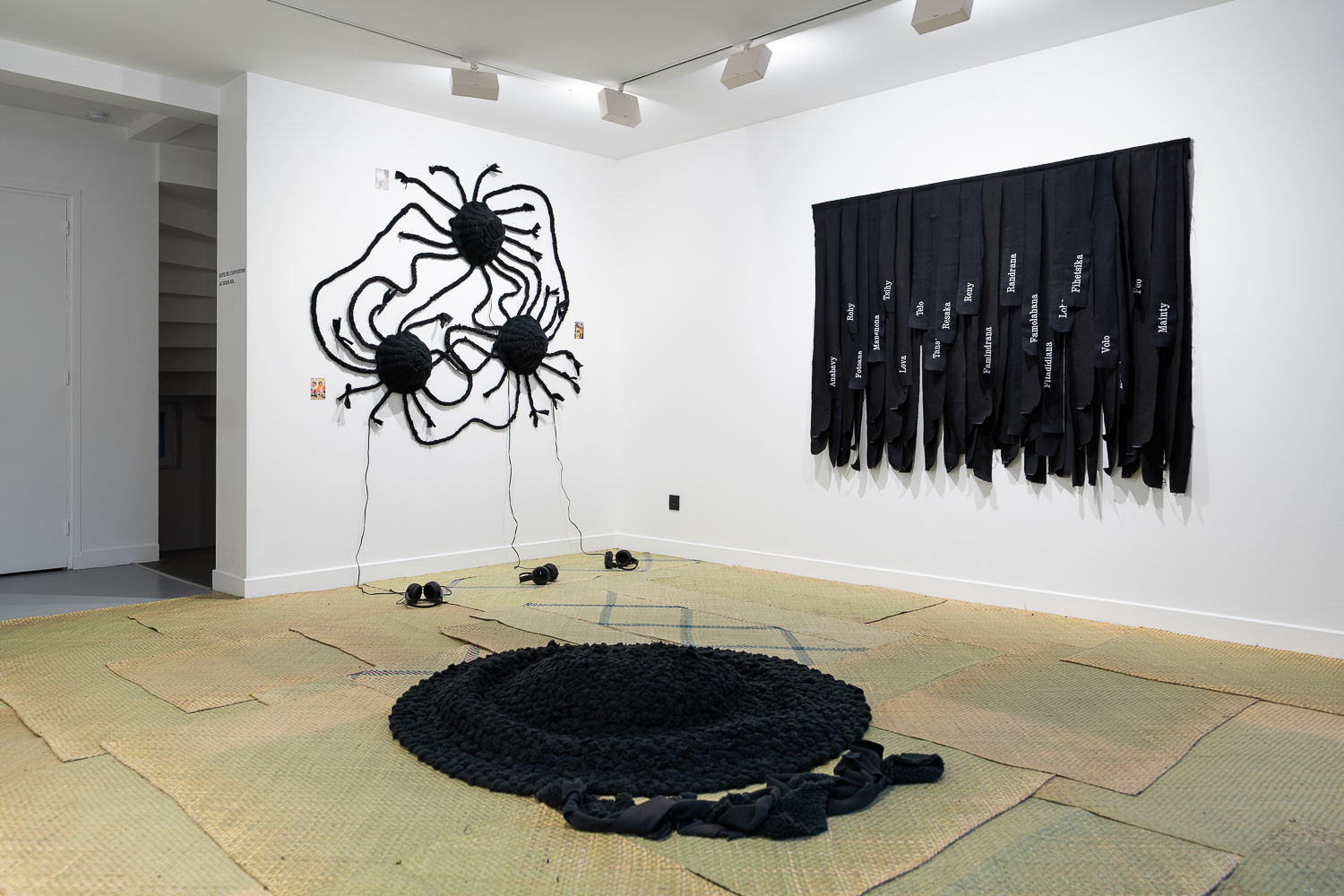
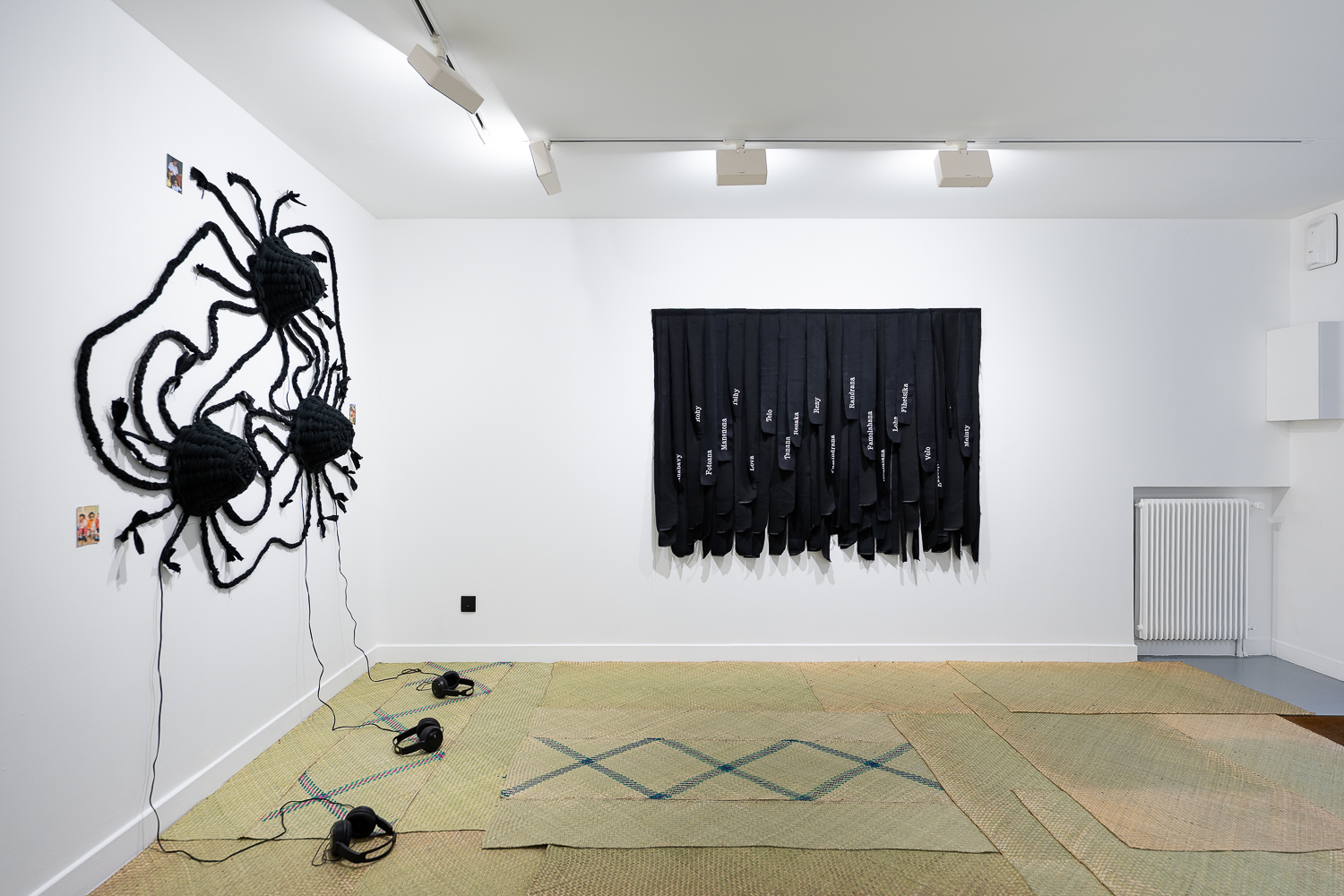
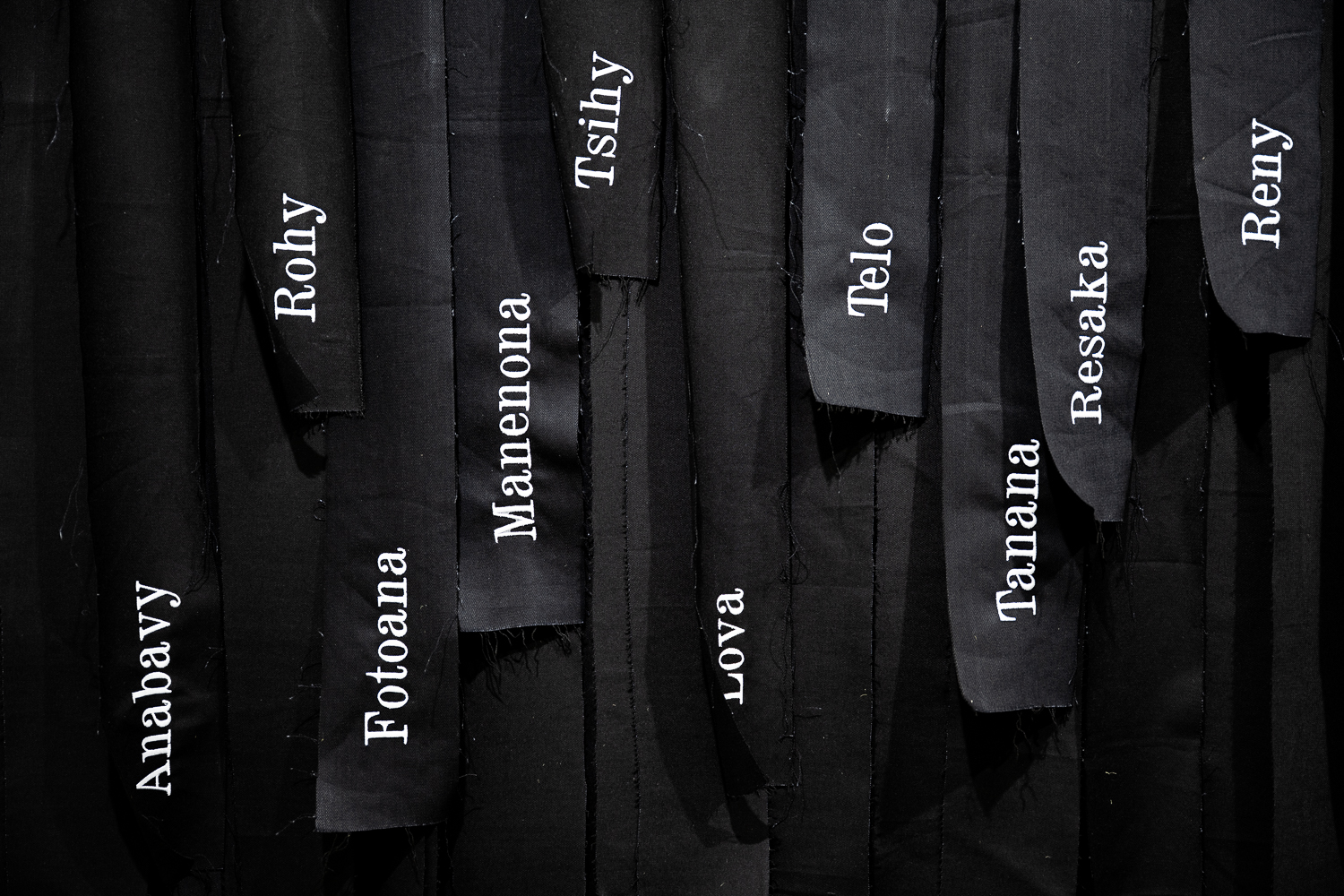
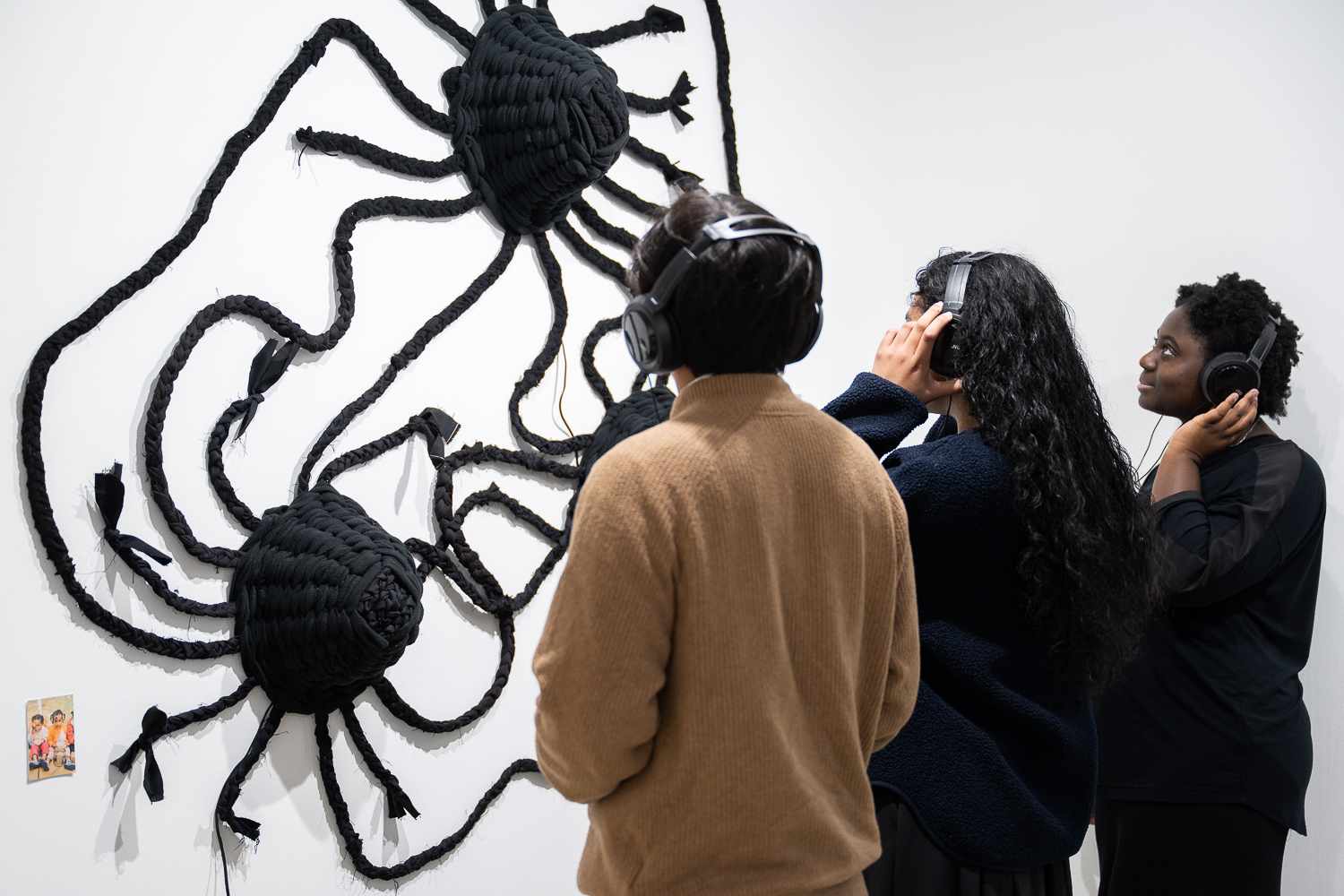
The installation Renouer les tresses de son identité [Reweaving the braids of one’s identity], presented in the Parisian space of Fondation H, unfolds in three elements. The first consists of panels of black cotton embroidered with words that introduce the different dimensions of the time of braiding: intimacy, gesture, transmission and memory. The second element is a sound installation composed of three oval textile modules, created using techniques inspired by basketry and adorned with braids, broadcasting interviews with women from different regions of Madagascar who share their childhood memories of the role of braiding. The third element is a circular work placed on tsihy mats, made up of black textile braids evoking the diversity of hair textures. This deliberately unfinished braid invites the public to extend the gesture, to participate in transmission and to contribute to a living heritage. Through this installation, the artist proposes a new way of interpreting and transmitting Malagasy heritage — a heritage built from personal stories, orality and gesture, and developed through collective participation. The time of braiding becomes a collective space where the intimate is transformed into heritage, and an invitation to celebrate the richness of Malagasy culture through the sharing of memories, experiences and care.